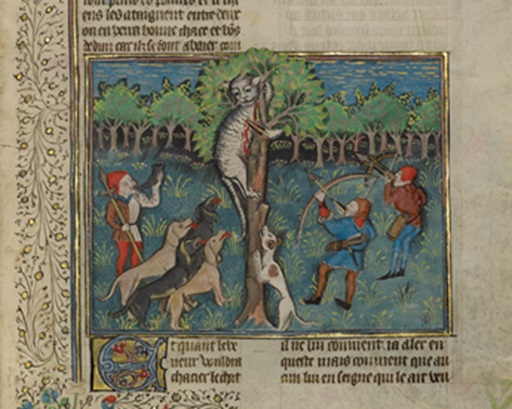
Often in medieval art—though occasionally in renaissance art too—cats are depicted as a nearly anthropomorphic, a misconstrued reflection of the actual animal. These creatures hold the predominant features of a cat: a small, furry body, clawed feet, and pointy ears. However, in the process, the face of a cat is lost. Usually, the style medieval artists used gave cats human features, from protruding noses to eyebrows to human eyes. Unlike future art movements, medieval art was not focused on realism and was really quite cartoony. This makes them perfect for drawing! It doesn’t matter if you're a talented artist, or can only draw stick figures; if anything, the worse the drawing is, the better it gets. No matter where you’re at, this page will teach you how to replicate these freaky cats.

While house cats receive this anthropomorphization, this extends to big cats too. As seen in the picture above, these big cats possess the same realistic body with a human-like face. So if you want to draw a lion, leopard, tiger, or any other big cat.
Don’t be afraid to get creative! Most of these cats happen to find themselves in funny situations, weird poses, or with even more detailed faces. To learn more about how these cats came to be and see some more examples, check out ArtRKL’s article, “Mid-Evil Cats: Why Artists in the Dark Ages Made Them So Ugly.”